
How a Canadian Apparel Brand Went from Stalled Growth to $1M CAD/Month — The Shopify Strategy That Changed Everything
Every growing e-commerce brand hits a wall at some point.
Traffic is coming in. The product is solid. Customers seem happy. But conversions aren’t moving — and neither is revenue.
That’s exactly where Devon + Lang, a Calgary-based premium undergarment brand, found itself. Despite having a loyal customer base and a strong product-market fit, their online growth had plateaued. Ad spend wasn’t converting efficiently. Regional campaigns were inconsistent. And without clear customer data, product decisions were being made on gut feeling rather than evidence.
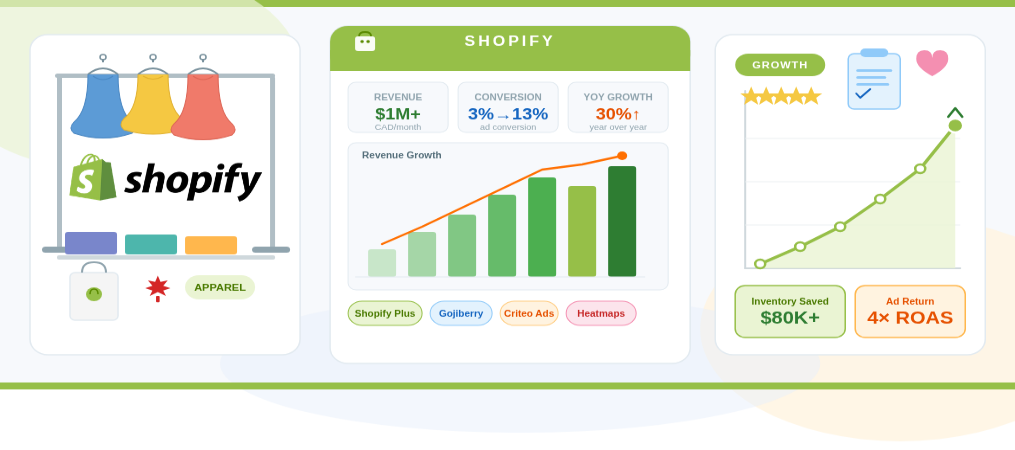
Fast forward to today: Devon + Lang is generating over $1 million CAD per month in revenue, growing 30% year-over-year, with ad conversion rates jumping from 3% to 13%.
So what changed? Here’s the full story.
Ready to Scale Your Shopify Store to 7 Figures?
🏷️ The Brand Behind the Breakthrough
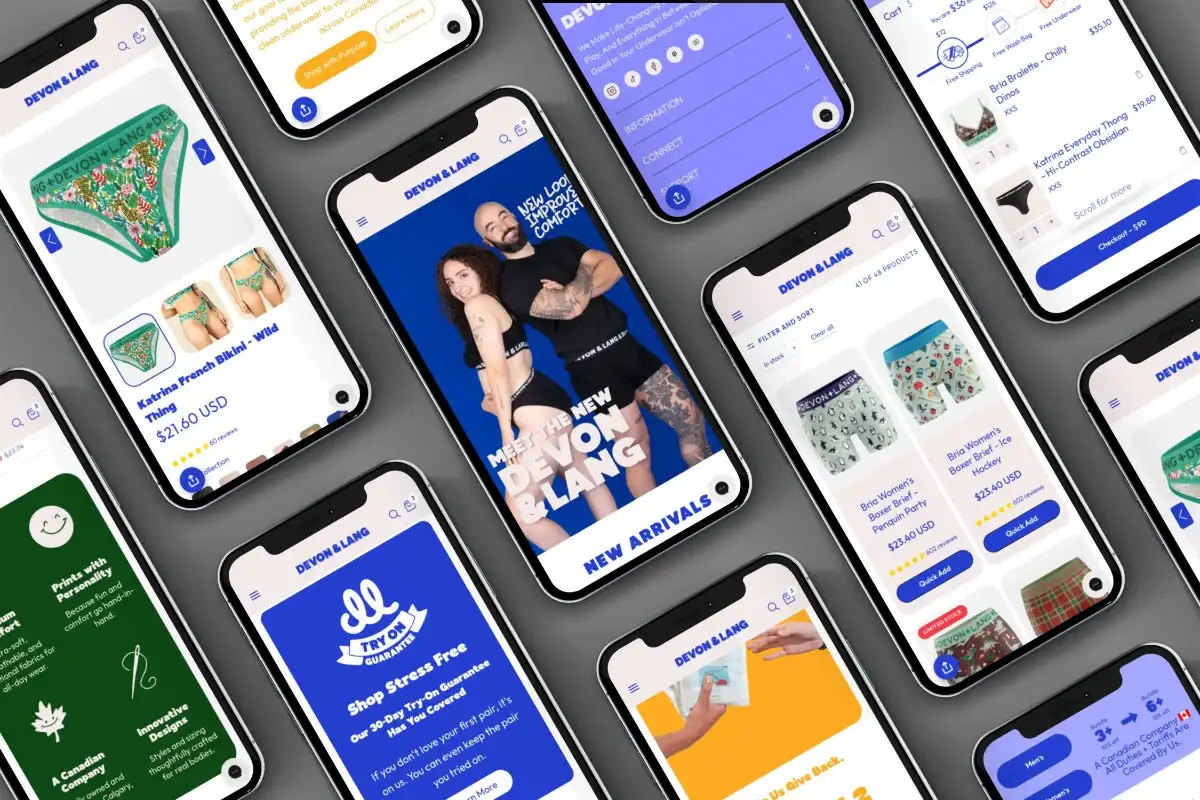
Founded in 2019 and based in Calgary, Alberta, Devon + Lang built its name around comfort-first, inclusive apparel — premium undergarments designed for everyday wearers across Canada.
The brand grew organically through direct-to-consumer (D2C) channels and quickly earned a loyal following. But as they expanded their product line and pushed for nationwide reach, cracks began to appear in their digital strategy.
🚧 The Problem: Growth Had Stalled
By the time Devon + Lang partnered with Born Techies, several critical challenges were holding the brand back:
1. Underperforming Online Conversions: Website traffic was steady, but the brand struggled to consistently turn browsers into buyers. The gap between visitors and purchases was costing them significant revenue every month.
2. Limited Customer Insight: Devon + Lang had no reliable mechanism for understanding what their customers actually wanted. Product decisions were being made without direct feedback, leading to inventory mismatches and missed opportunities.
3. A Blurry Product Strategy: As the product catalogue grew, prioritizing which SKUs to develop, promote, and stock became increasingly difficult. Without data, every decision carried unnecessary risk.
4. Inefficient Ad Spend: Online advertising performance had plateaued, with campaigns delivering inconsistent results across different Canadian regions. Messaging wasn’t aligned with how modern Canadian shoppers were searching and buying.
5. Cash Flow Pressure: Without a data-driven approach to inventory planning, the brand was at risk of over-investing in the wrong products — tying up cash in stock that didn’t move.
Is Your Shopify Store Leaving Money on the Table?
⚙️ The Strategy: Turning Customer Feedback into a Growth Engine
Rather than throwing more money at ads or redesigning the website from scratch, Born Techies took a fundamentally different approach — start with the customer and work backwards.
Here’s how the strategy unfolded:
📋 Step 1: Implement a Customer Feedback Loop
The team introduced a structured survey strategy using tools like Gojiberry’s 5-Second Test to capture real-time, post-purchase feedback directly from Devon + Lang customers.
The goal was simple: find out what customers actually value, what almost stopped them from buying, and what they wished the brand offered.
This wasn’t guesswork. This was direct signal from the people spending money.
📊 Step 2: Layer Feedback onto Shopify Analytics
Customer survey data was aggregated with Shopify analytics and performance metrics to build a comprehensive picture of product performance. This combination allowed the team to:
- Identify which products were genuine bestsellers vs. those benefiting from ad spend
- Spot underperformers early and reduce over-investment
- Understand the emotional and functional drivers behind purchasing decisions
🗺️ Step 3: Rebuild the Product Roadmap Around Real Preferences
The data told a clear story: Devon + Lang’s customers prioritized comfort and inclusivity above everything else.
Armed with this insight, the brand developed new collections that directly addressed these preferences — including gender-inclusive designs and the now-popular LOVED. Be Seen Collection.
Instead of launching products based on trend forecasting alone, every new SKU was validated against real customer demand before hitting the shelves.
📣 Step 4: Align Marketing Messaging with Customer Intent
Once the product priorities were clear, the same customer insights were fed back into the brand’s marketing ecosystem — across Shopify product pages, email campaigns, and social media channels.
The result? Ad copy, imagery, and product descriptions that resonated with exactly the kind of shopper most likely to convert. This alignment between message and audience intent is what drove the dramatic improvement in ad performance.
🛠️ Tools That Powered the Transformation
- Shopify Plus — the backbone of the brand’s e-commerce infrastructure
- Gojiberry Survey — for capturing post-purchase customer feedback
- Heatmaps & Tracking — to understand on-site behaviour and UX friction points
- Criteo Ads Setup — for retargeting and paid acquisition optimization
📈 The Results: By the Numbers
The impact of this data-driven approach was measurable, significant, and fast.
| Metric | Result |
|---|---|
| Monthly Revenue | 1M+ CAD/month and growing |
| Year-Over-Year Growth | 30% YOY increase |
| Ad Conversion Rate | Increased from 3% to 13% |
| Inventory Cost Savings | $80,000+ saved through smarter planning |
| Customer Engagement | Higher repeat purchases through personalized messaging |
| Brand Experience | Improved UX and product-market alignment |
The improvement in ad conversion rate alone — from 3% to 13% — represents more than a 4x increase in return on ad spend. For a brand investing significantly in paid acquisition across Canada, this was a game-changer.
What’s Holding Your Store Back from Its Next Million?
💡 Why This Approach Worked
Most e-commerce brands facing a growth plateau react by spending more on ads, redesigning their website, or launching new products. Devon + Lang did something smarter — they listened first.
By building a systematic feedback loop between their customers and their product/marketing decisions, they eliminated the guesswork that was costing them time, money, and missed revenue.
The lesson here isn’t specific to apparel or even to Canadian e-commerce. It applies to any D2C brand:
When you know exactly why your customers buy — and why they don’t — every decision becomes easier and every dollar works harder.
🎯 What You Can Take Away From Devon + Lang’s Story
If your Shopify store is seeing traffic but not conversions, or your ad spend isn’t delivering the ROI it should, consider whether the root cause is a data problem — not a design or budget problem.
Here are three actionable takeaways from Devon + Lang’s journey:
- Survey your customers post-purchase. Tools like Gojiberry make this simple. The insights you get will outperform any amount of competitor research.
- Connect customer feedback to your product roadmap. Don’t develop new products in a vacuum. Let your existing customers tell you what they want next.
- Align your ad messaging with what your data reveals. When your copy reflects your customers’ actual language and priorities, conversion rates follow.
💬 What the Client Said
The results speak for themselves, but so does the client. Here’s what Tyler McCombs, Founder of Devon + Lang, had to say about the experience:
“Thanks for transforming our underperforming Shopify store and ads into a profitable, scalable growth engine generating 1M CAD/month across Canada — with measurable conversion and revenue impact.”
— Tyler McCombs, Founder, Devon + Lang
This kind of outcome doesn’t happen by accident. It’s the result of a clear strategy, the right tools, and a team willing to dig into the data and make bold, informed decisions.
🏁 Final Thoughts
Devon + Lang’s journey from stalled growth to $1M CAD/month isn’t a story about a flashy redesign or a viral campaign. It’s a story about getting closer to the customer — and then building everything around what they found.
For brands looking to scale on Shopify, the message is clear: data-driven strategy isn’t a luxury. It’s the foundation everything else is built on.
🏢 How Born Techies Can Help
Want to achieve similar results for your Shopify store? Born Techies helps apparel and e-commerce brands unlock growth through strategic Shopify optimization and customer-centric digital marketing.
Don’t Let Another Month Pass with Underperforming Ads

FAQ: Shopify Conversion Rate Optimization
Here are some common Frequently Asked Questions.
1. What does Shopify optimization actually mean for an apparel brand?
Shopify optimization for an apparel brand goes beyond just making the website look good. It includes improving site speed, refining product page UX, aligning ad messaging with customer intent, and using data from tools like heatmaps and surveys to remove friction in the buying journey. For Devon + Lang, it meant combining all of these into one cohesive, data-driven growth strategy.
2. How did Devon + Lang increase their ad conversion rate from 3% to 13%?
The key was aligning ad messaging with real customer insights. By using post-purchase surveys and Shopify analytics together, the team identified exactly what motivated their customers to buy — and rewrote ad copy, product descriptions, and email campaigns around those insights. When your message matches your audience’s intent, conversions follow naturally.
3. How long does it take to see results from a Shopify optimization strategy?
It depends on the brand’s starting point and the scope of changes. For Devon + Lang, meaningful improvements in conversion rates and ad performance became visible within the early months of implementation. A data-driven approach accelerates results because every decision is validated before execution — reducing trial and error.
4. What is a post-purchase survey and why does it matter?
A post-purchase survey is a short questionnaire shown to customers immediately after they complete a purchase. It captures real-time feedback on why they bought, what almost stopped them, and what they’d like to see next. For Devon + Lang, this feedback directly shaped their product roadmap and marketing messaging — saving over $80,000 in excess inventory costs.
5. Can this strategy work for small Shopify stores or only large brands?
This strategy works at any scale. The core principle — listening to your customers and making decisions based on their feedback — is just as powerful for a store doing $10K/month as it is for one doing $1M/month. In fact, smaller brands often see faster results because they can implement changes more quickly.
6. What tools did Born Techies use to grow Devon + Lang's Shopify store?
The core tech stack included Shopify Plus for the storefront, Gojiberry for customer surveys, heatmaps and tracking tools for UX insights, and Criteo Ads for paid acquisition and retargeting. The power wasn’t in any single tool — it was in how all the data from these tools was connected and acted upon.
7. How do I know if my Shopify store needs optimization?
If you’re experiencing any of the following, it’s a strong signal your store needs attention — steady traffic but low conversions, inconsistent ad performance, no clear data on why customers buy or leave, growing product catalogue but unclear priorities, or rising ad spend with flat revenue. Sound familiar? That’s exactly where Devon + Lang started.
8. Why is customer feedback more valuable than competitor research?
Competitor research tells you what others are doing — customer feedback tells you what YOUR audience actually wants. Devon + Lang’s biggest breakthrough came not from studying competitors but from asking their own buyers directly. Real customer language, real purchase motivations, and real objections are far more actionable than any industry trend report. When you build your product and marketing strategy around your own customer data, every decision has a higher chance of success.
9. What role did inclusivity play in Devon + Lang's product growth strategy?
Inclusivity wasn’t just a brand value for Devon + Lang — it was a data-backed growth lever. Post-purchase surveys revealed that comfort and inclusivity were the two biggest purchase drivers for their customers. This insight led directly to the development of gender-inclusive designs and the popular LOVED. Be Seen Collection. By validating these product directions with real customer feedback before launch, the brand reduced risk and increased the chances of commercial success from day one.
10. How does Born Techies approach Shopify growth differently from a typical digital agency?
Most agencies focus on one piece of the puzzle — ads, design, or SEO. Born Techies takes a full-funnel, data-first approach that connects customer insights, product strategy, UX, and paid advertising into one cohesive growth engine. The Devon + Lang case study is a clear example — instead of just optimizing ads in isolation, the team rebuilt the entire customer acquisition and retention strategy around what the data revealed. The result was sustainable, scalable growth rather than short-term spikes.
What’s Really Stopping Your Store from Scaling?
It’s rarely what you think. Most brands blame their product or their budget — but the real answer is almost always in the data.
We help you find it by:
- 🧠 Analysing what your customers actually want
- 🛒 Fixing the conversion gaps costing you sales
- 📣 Aligning your ads with real purchase intent
Fill in the form and let’s find out what’s holding your store back.
Let’s turn your store into a consistent revenue-generating platform.
